
Agents you can trust need more than a language model
Convect agents act on a live model of your business and call a real optimization engine for every plan. That’s how they can change your schedule — not just talk about it.
Planning AgentsAct
Monitor, decide and act — with guardrails
- Sense internal and external change
- Call the optimizer for options
- Recommend, explain, one-click approve
Optimization EngineSolve
Find the best feasible plan
- Variables · objectives · constraints
- Network-wide solve in minutes
- Incremental replans and what-ifs
Contour OntologyUnderstand
Model how your business really runs
- Entities · relationships · rules · constraints
- Automatic impact tracing
- Reusable industry templates
Context flows up: understand → solve → act · hover a layer for details
Layer 3 · AI Planning Agents
Planning agents that work 24/7 — and show their work
The ontology provides understanding. The optimizer provides answers. Agents combine the two into a system that runs on its own.
Convect runs a team of specialized agents. They aren’t chatbots or recommendation widgets — they sense business events, reason about impact, call the optimizer, and act within the authority you give them.
Demand Sensing Agent
Watches demand signals and triggers plan updates when they shift
Monitors orders, sell-through and external signals like weather and promotions
Scheduling Agent
Builds the best feasible schedule from live constraints
Calls the optimization engine with current capacity and material status
Disruption Response Agent
Replans around breakdowns, late materials and rush orders
Listens for execution events and triggers incremental replans
Coordination Agent
Keeps procurement, production and logistics plans aligned
Runs cross-functional constraint checks and resolves conflicts
Root-Cause Agent
Answers “why can’t this order ship on time?”
Traces the ontology backward to the binding constraint
The agent loop
AGENT LOOP
24/7
always on
1Sense
Continuously watch orders, demand signals, capacity, inventory and supplier updates
2Reason
Use the ontology to work out what a change means and everything it touches
3Decide
Call the optimization engine to generate and compare response options
4Act
Update the plan within its authority — or send a recommendation for approval
5Learn
Learn from outcomes and planner choices to improve the next decision
What this means for you
Your planners stop watching screens for rush orders and late trucks. Agents handle the routine exceptions and bring people in only for decisions that matter — planners go from firefighting to setting strategy.
Layer 1 · Contour Ontology
Contour gives agents a working model of your business
What is a supply chain ontology?
Traditional systems describe your supply chain as tables and fields — item codes, warehouse IDs, line names. They store the data, but they don’t understand how any of it relates.
Contour (Convect Ontology Unified Representation) changes that. It captures your supply chain as a semantic network — the full contour of how your business actually runs:
- Entities
- Products, materials, lines, warehouses, customers, suppliers, work orders, BOMs…
- Relationships
- Product A is made from material B on line C, ships to customer D, subject to constraint E…
- Rules
- Changeovers need clean time, minimum batch sizes, equipment compatibility matrices…
- Constraints
- Capacity limits, material availability, due dates, routings, shelf life…
So when you tell the system “Line 3 is down for maintenance next week,” it doesn’t just update a date field. It works out which work orders are affected, which schedules must change, which deliveries are at risk and which lines could take over.
Supply chain ontology Click a node for details
Illustrative data · simplified slice of a food plant ontology
How it differs from a traditional data model
| Traditional data model | Supply chain ontology | |
|---|---|---|
| How it describes the business | Tables and fields (flat) | Entities, relationships and rules (a semantic network) |
| Impact of a change | People work out the ripple effects | Change propagation is inferred automatically |
| Adapting to new scenarios | Change code or table schemas | Add or edit entities and relationships |
| Industry differences | A separate system per industry | One engine, different ontology configurations |
| What AI can understand | Only structured inputs | Business meaning it can reason over |
What this means for you
Your experts stop re-teaching the system what a changeover rule or an approved substitute is — that knowledge lives in the model. Add a plant or a product line and the agents understand how it fits the moment it’s registered.
Layer 2 · Optimization Engine
Real math, not guesswork: the best feasible plan in minutes
Language models are great at language. They are not solvers. When an agent needs a plan, it calls an optimization engine that can prove its answer satisfies every constraint.
Convect’s in-house engine turns planning into a large-scale mathematical optimization model:
- Decisions: what to make, where, how much, when to start, with which materials, shipped to which DC…
- Objective: minimize total cost (production + inventory + transport + shortage penalties) or maximize service
- Constraints: capacity, materials, due dates, routings, batch sizes — all drawn from the ontology
The engine searches millions of possible plans in minutes. Where problems are small enough it proves global optimality; at very large scale it returns a high-quality feasible plan with a measured gap to the theoretical bound.
Optimization model (simplified)
min Σ production + inventory + transport + shortage penalty
s.t.
Σp xp,l,t · hoursp,l ≤ capacityl,tcapacity
Σp BOMm,p · xp,·,t ≤ availablem,tmaterials
finisho ≤ dueo + lateodue dates
changeoverp→q,l ≥ cleanp,qprocess rule (from ontology)
Objective convergence
IllustrativeCost structure: before vs. after
Illustrative · before = 100Scale
Multi-plant × multi-line × multi-SKU × multi-period models solved together
Speed
Tens of millions of plan options evaluated and compared in minutes
Incremental replans
Only the affected part of the plan is re-solved when data changes
Concurrent planning
Demand, production, materials, inventory and transport optimized together — not in sequence
Multiple objectives
Lowest total cost, highest service, or a weighted mix — you decide what matters
Explainable
Binding constraints and bottlenecks surfaced, so planners see why the plan looks the way it does
What this means for you
Your planners used to spend a whole day iterating in spreadsheets. Now the engine returns the best plan in minutes — with every constraint respected. The planner’s job shifts from doing arithmetic to making decisions.
All three layers together
From signal to decision: one rush order, step by step
Scenario: a food manufacturer receives a large rush order that has to fit into an existing schedule. Scroll to see which layer does what.
STEP 1
A rush order arrives
- Planning Agents: Demand Sensing Agent picks up the order and flags it as a rush order
Involves: Planning Agents
STEP 2
Impact analysis
- Planning Agents: Root-Cause Agent traces the graph and finds Line 3 is fully loaded this week
- Contour Ontology: The ontology resolves which materials, lines and warehouses this product depends on
Involves: Planning Agents · Contour Ontology
STEP 3
Options generated
- Planning Agents: Scheduling Agent calls the optimizer and gets back 3 candidate plans
- Optimization Engine: The solver finds the best way to fit the order: resequence Line 2 and defer low-priority work
- Contour Ontology: Supplies the set of qualified lines and process constraints
Involves: Planning Agents · Optimization Engine · Contour Ontology
STEP 4
Trade-offs evaluated
- Planning Agents: Coordination Agent confirms procurement and logistics can support it
- Optimization Engine: Scores every option on cost and service level
- Contour Ontology: Checks each option’s knock-on effect on other orders
Involves: Planning Agents · Optimization Engine · Contour Ontology
STEP 5
Decision & execution
- Planning Agents: The agent sends the recommendation and its reasoning to the planner — one click to approve
- Optimization Engine: Publishes the final schedule
- Contour Ontology: Updates the live schedule state in the model
Involves: Planning Agents · Optimization Engine · Contour Ontology
STEP 6
Closed-loop learning
- Planning Agents: The agent learns how this kind of rush order is best handled next time
- Optimization Engine: Logs solver performance
- Contour Ontology: Records the decision path
Involves: Planning Agents · Optimization Engine · Contour Ontology
Step 1 of 6 · A rush order arrives
Planning AgentsAct
Monitor, decide and act — with guardrails
Demand Sensing Agent picks up the order and flags it as a rush order
Optimization EngineSolve
Find the best feasible plan
Contour OntologyUnderstand
Model how your business really runs
Context flows up: understand → solve → act
Who builds it
Operations research meets AI
Optimization scientists and AI engineers with deep, hands-on supply chain experience.

Ethan Zhang
Co-founder & CEO
Silicon Valley veteran with 20+ years building enterprise software and AI applications. A founding member of LinkedIn’s data science team, he later led supply chain optimization algorithms at JD.com, and has led planning transformations at Yili, Unilever and Dongfang Boiler.

Max Shen
Strategic Advisor
Professor of Industrial Engineering and Operations Research at UC Berkeley and Vice-President of the University of Hong Kong. An INFORMS Fellow and two-time winner of the Franz Edelman Award, operations research’s highest honor for practice.
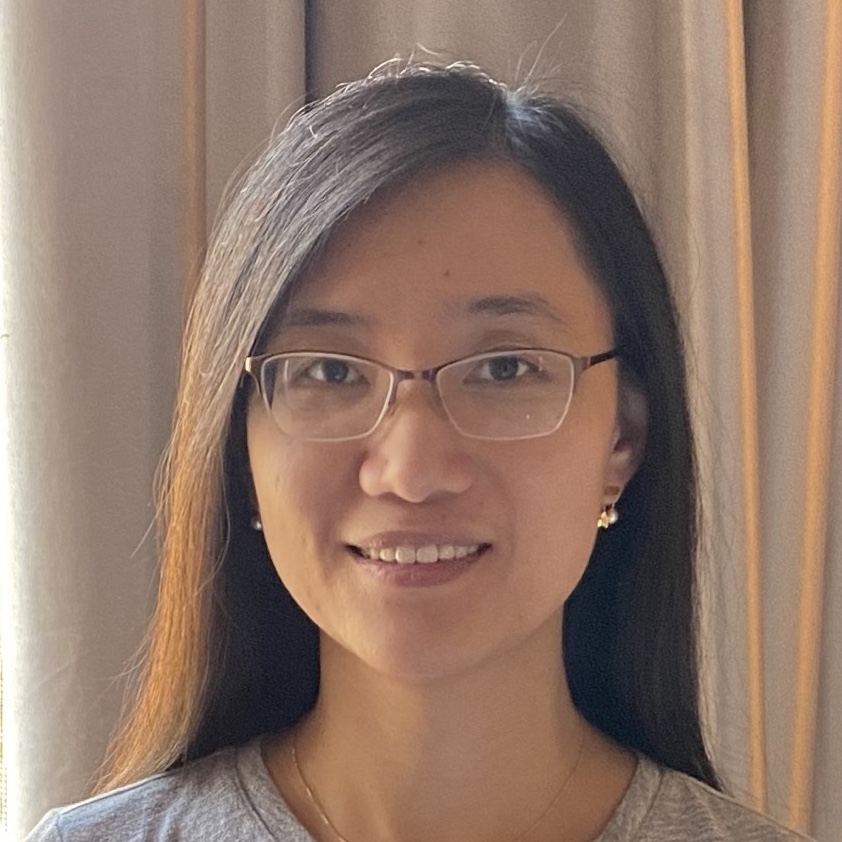
Zhuofei Li
Chief Scientist
Holds a PhD in operations research and has been a key contributor to supply chain and logistics transformation at Walmart and Alibaba.
The team: AI and operations research scientists from Silicon Valley — many with PhDs in operations research — with supply chain optimization experience at Apple, JD.com, LinkedIn and Walmart. R&D teams in Silicon Valley, Suzhou and Chengdu.
Want the full technical picture?
Get our guide to AI agents for supply chain planning, or book 30 minutes with an architect to walk through how agents, ontology, optimization and guardrails fit together.